Understanding how a solar generator works allows you to select the best one for your power requirements. Capacity, output, and charging speed all influence what the generator can support, how long it operates, and how quickly it recharges. These factors influence performance whether you're charging gadgets at home, off-grid, or in an emergency. Battery size indicates how much energy is stored, output ratings specify what it can power, and charging techniques affect its usefulness. This guide clearly lays out each component, allowing you to confidently compare models, prevent surprises, and maximize the value of your solar generator purchase.

What Does Solar Generator Capacity Really Mean?
Battery Capacity, Watt-Hours, and Usable Energy
Watt-hours (Wh) are used to quantify the capacity of a solar generator's internal battery. For example, a 1,000Wh battery could potentially run a 100W gadget for ten hours. However, inverter loss and system inefficiencies cause real usable energy to be 85-90% of the quoted capacity. This means that a 1,000Wh unit might deliver around 850Wh of real output. Understanding this distinction aids in setting reasonable expectations. The greater the capacity, the longer you can operate gadgets or support several goods. LiFePO₄ batteries are ideal for off-grid or backup applications due to their higher efficiency and longer lifespan.
How Capacity Affects Runtime and Device Support
Capacity directly impacts how long a solar generator will power your gadgets. A larger capacity indicates more stored energy and a longer duration. A 500Wh generator can power a 50W fan for 10 hours, but a 2,000Wh device can power a refrigerator and router overnight. Device wattage multiplied by usage duration equals watt-hour requirements; therefore, matching this to generator capacity helps you prevent running out of power. High-capacity generators may accommodate more or bigger devices, but they are generally heavier and more expensive. Assessing your daily energy use guarantees that the generator fulfills your requirements, whether for short vacations, emergency backup, or complete off-grid setups.
How Does Solar Generator Power Output Work?
Continuous Output vs Surge Power Explained
Solar generators have two output levels: continuous and surge. Continuous output is the highest power that a generator can produce over time, such as 1,000W nonstop. Surge power refers to brief spurts for starting loads, such as a refrigerator that requires 1,800W to start but only 150W to run. If your generator has a low surge rating, it may shut down when powering motors or compressors. Understanding both ratings guarantees that your system can withstand peak and ongoing demand. For safe, dependable performance, select a generator with surge power 1.5 to 2 times more than the initial load of your most powerful equipment.
Matching Output Watts to Household and Outdoor Devices
Each equipment you power has a wattage rating—TVs, computers, routers, refrigerators, and tools all require various amounts. A 300W solar generator can power basic devices, but not microwaves or kettles. To power a 700W coffee machine, your generator must provide at least 700W of continuous output. To calculate your required output, add the wattage of all devices you want to use simultaneously. Don't forget about surge protection for anything with a motor. For camping, a 300-500W output is frequently sufficient. For home backup or construction, use 1,500-2,000W output. Matching output to your devices prevents tripped circuits and power outages.
AC, DC, and USB Outputs and Their Use Cases
Solar generators have several sorts of output ports to accommodate your gadgets. AC outlets power common household gadgets such as televisions, laptop computers, and appliances. DC ports are ideal for automobile fridges, LED lights, and air pumps, providing more efficient energy utilization. USB-A and USB-C ports are suitable for phones, tablets, cameras, and modern computers. If your device supports USB-C PD ports, use them to charge more quickly. Matching devices to the appropriate port type improves speed and runtime. Using DC or USB wherever feasible decreases inverter strain and energy loss, allowing your solar generator to run longer between charges.
How Do Solar Generators Charge and Refill Power?
Solar Panel Input, Sun Conditions, and Charging Speed
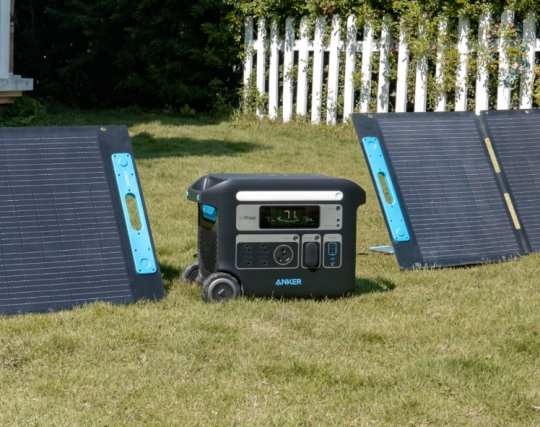
A solar powered generator recharges through external solar panels that convert sunlight into electricity. Input rating (e.g., 200W max) determines how quickly the battery recharges. For example, a 1,000Wh solar-powered generator with a 200W input charges in 6-8 hours of direct sunlight. Cloud cover, panel angle, and solar intensity all influence real-world charging speed. To achieve the greatest results, use high-efficiency panels with optimum tilt. Portable and folding alternatives are ideal for outdoor use. Always double-check the panel wattage and voltage to ensure they meet the specifications of your generator. Planning charging time around weather conditions ensures that your system is fully charged and available when needed.
Wall Charging, Car Charging, and Hybrid Options
In addition to solar panels, most solar generators provide wall and automobile charging. Wall charging is the fastest and most convenient way to prepare for storms, fully charging the battery in 4-8 hours depending on the model. Car charging using 12V outlets is effective for topping off on road trips, although it is slower—typically 8-12 hours. Some sophisticated generators provide dual-input charging from both solar and AC sources, which reduces recharging time. Hybrid alternatives increase your system's versatility and save you from becoming stranded in overcast conditions. Having several charging ways allows you greater flexibility, especially in an emergency or when on the go.
Conclusion
Solar generator performance is determined by three important factors: capacity, output, and charging method. Battery capacity dictates how long your gadgets can operate, output ratings specify what the system can support, and charging speed decides how quickly you can recharge. Understanding watt-hours, surge power, and input restrictions allows you to select the best item for your lifestyle. Whether you're camping, living off-grid, or planning for power outages, matching generator specs to your actual power requirements is critical. With the appropriate expertise, you can make the most of each charge and enjoy clean, silent power whenever and wherever you need it.